


Next time you look at the moon, take a moment to remember Raqel Vivas, a little-known Colombian weaver who helped make NASA’s Apollo 11 moon landing a success. While Neil Armstrong’s first step onto the lunar surface remains a defining moment in human history, his “giant leap for mankind” would not have been possible without this Boyaca-born textile entrepreneur.
Colombia’s contribution to putting the world’s first man on the moon may seem insignificant, but without it the Apollo 11 spaceflight may never have gone ahead. Vivas, and her fabric company Textiles Huatay, made the virgin sheep wool fabric used to line the capsule in which astronauts Neil Armstrong, Buzz Aldrin, and Michael Collins made their famous journey to the moon.
Woolen cloth made by hand by a small, family-run company in Colombia seems an unlikely choice for the United States’ hi-tec space agency. However, Vivas’ fabric–which was inflammable, thermal, and anti-static–was the only material that passed NASA’s stringent safety tests.
Three years before the moon landing, the Apollo space programme suffered a tragedy. During a practice launch, an electrical short-circuit sparked flames in the command module of the Apollo 1 spacecraft. Fire ripped through the cabin, which was filled with pure oxygen. All three astronauts on board were killed.
Following this disaster, NASA began to look for fabrics that would allow their spacecrews to travel securely. Vivas submitted a tender to the space agency and won the prestigious contract to weave the lining for the crew capsule of the famed Apollo 11.
From Boyaca to the Moon: Colombia’s distinctive woolen fabric lines NASA’s Apollo 11
Raquel Vivas was born in 1901 in Floresta, a town in Boyaca, central Colombia. She grew up surrounded by the region’s wool industry and exposed to the process of creating cloth and other products out of wool.
Boyaca’s tradition of spinning, knitting and weaving sheep’s wool–typically by hand and on a horizontal loom–dates back hundreds of years. English sheep were originally brought to Colombia from Spain in the 15th and 16th centuries as part of the “Columbian-exchange.” This was a colonizing process that involved the widespread transfer of plants, animals and diseases between the “New World” and Europe.
This process fundamentally changed the cultures, societies and lives of the indigenous communities in the Americas. Smallpox, measles and cholera brought from the Old World wiped out 90 percent of the indigenous population as well as many of the African slaves that the Europeans trafficked to the region.
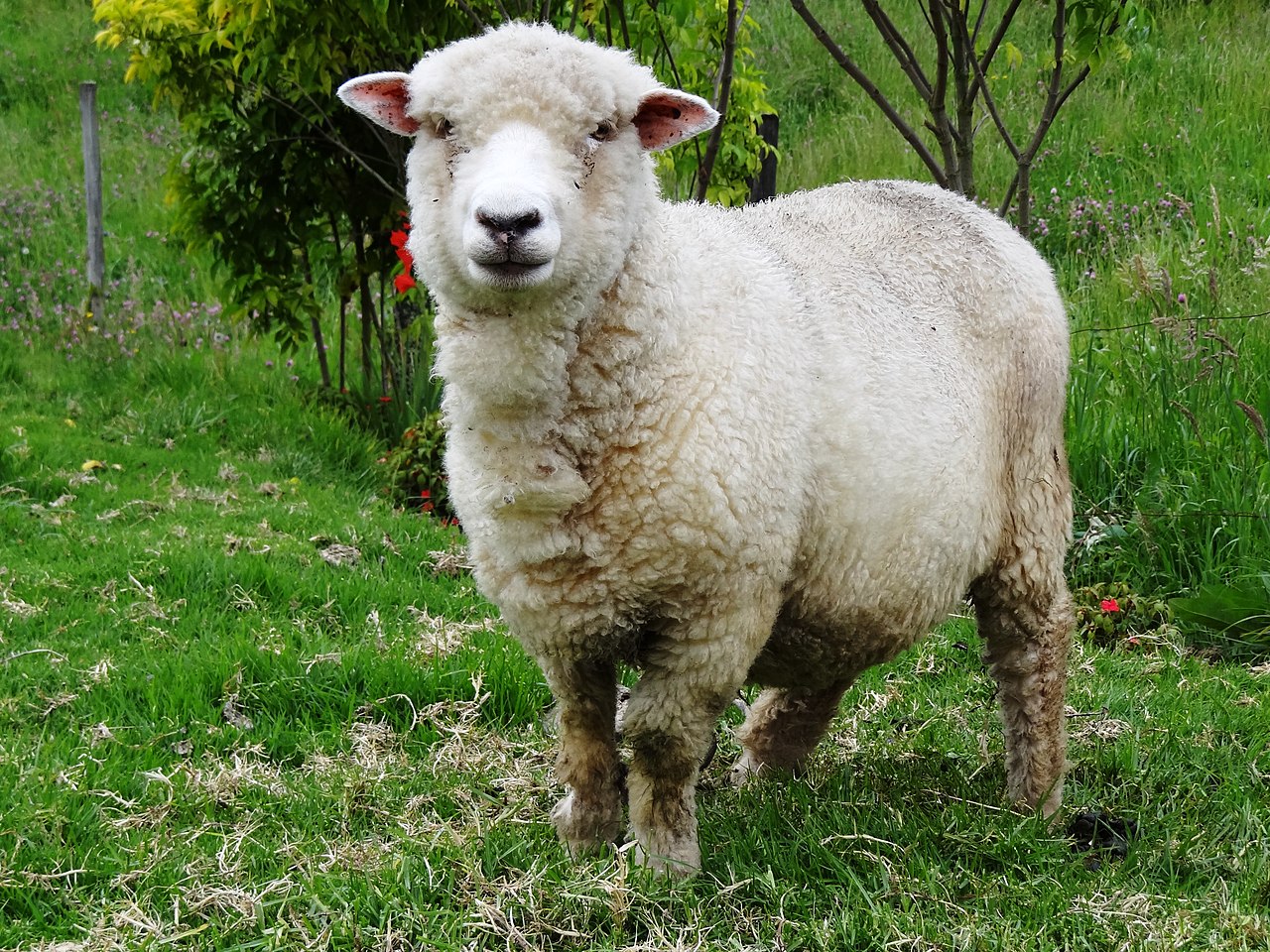
While the effects of colonization were devastating, Boyaca’s cold climate and vast Andean mountain ranges provided the ideal conditions for sheep farming. Local communities, highly experienced in producing other fabrics, began to use the sheep’s coats to make wool. Today, this breed of sheep is endemic to Boyaca and has adapted to its unique climate by developing thicker and greasier wool perfect for weaving.
Wool is now integral to Boyaca’s culture and economy. The region is renowned for its superior quality wool and for producing products such as the ruana, a variant of a poncho made out of thick lambs’ wool.
It was from this heritage that Vivas emerged. Deciding to dedicate herself to weaving, she set up Textiles Huatay and eventually secured premises in Bogota’s Usaquen suburb. By the 1960s–when the Space Race between Cold War rivals the USA and the Soviet Union was taking off–she had established herself as the producer of the best fabrics in the whole of Colombia.

The Colombian touch in NASA’s Apollo 11
Having won the bid to weave the fabric for the Apollo 11 command module, named “Columbia,” Vivas set to work. Over three months, she and 12 staff wove 3,200 meters of virgin sheep wool cloth by hand. The cloth was then exported to the U.S. and fitted inside the spaceship capsule.
The wool lining was meant to be made in secret so that the Soviet Union could not obtain production details and make it to the moon before the U.S. During the stalemate of the Cold War, the technological advantage demonstrated by spaceflight was considered part of national security and a symbol of political strength and ideology.
However, details of Vivas’ collaboration were leaked and her wool was eventually used by the Russian space mission as well. The media also picked up on Colombia’s unusual contribution to spaceflight. One of the country’s leading newspapers, El Tiempo, reported at the time that Vivas’s flame-proof fabric provided “a psychological and visual support to the crew.” It said that NASA hoped the fabric would provide the astronauts with a feeling of warmth that reminded them of home and “gave the sensation of earthly freshness.”
Whether NASA expected to propel the scent of sheep 238,855 miles up into space remains to be seen. However, Vivas insisted that the interior of Apollo 11 should smell like the animals whose wool had enabled its flight. She felt this scent would symbolize that her ancestry, Boyacense heritage, and a bit of Colombian territory, had reached outer space.

Colombia’s textile traditions reach from NASA to the White House
To recognize her role in space history, NASA and the U.S. government invited Vivas to witness Apollo 11’s lift-off. This took place in Cape Canaveral, Florida, on July 16, 1969.
This was not the first time she had rubbed shoulders with high-profile leaders. Before securing the NASA contract, Vivas had exported her woolen cloth to the U.S. for over a decade. She had already supplied material to Air Force One, the U.S. president’s official aircraft, and to the White House.
Similarly, Vivas’ sheep’s wool fabric was not the only Colombian textile that supported NASA’s lunar mission. The hammock–first developed and designed by indigenous peoples in Colombia and elsewhere in South America–also helped ensure Apollo 11 astronauts’ comfort in space.
After Armstrong and Aldrin arrived on the moon, they spent time exploring before returning to their lunar module. This was the small craft used for traveling between the moon’s surface and their orbiting spacecraft. Exhausted by their moonwalks and their bulky space suits, they tried to rest, yet struggled to fall asleep. Their cabin was so small that it did not have seats, let alone beds. As a result, the astronauts were forced to curl up on the cold, cramped floor.
Armstrong napped on the engine cover by rigging up a sling for his legs. While he still did not get much sleep, his improvised hammock inspired NASA to improve sleeping conditions for other astronauts. When the next space mission, Apollo 12, blasted off a few months later, it was equipped with “moon hammocks.”
A simple pre-Columbian textile technology turned out to provide the most comfortable and flexible sleeping solution for the world’s most advanced space infrastructure. The Arawak indigenous community who invented the hammock were not far off when they named it “the cradle of the gods.”
Colombia’s inspirational NASA legacy
After Vivas died in 1995 aged 94, her children assumed her business and ran it until 2001. Then, they finally packed up its looms and closed its doors for the last time.
While Vivas’s story is not widely known, she is much admired by those who are aware of her remarkable contribution to space exploration. Recently, she has been honored by the Colombian artist Andrés Quintero, whose own family originates from Boyaca. He featured her story in a multimedia installation exploring the interconnection between local crafts and hyper technologies, which was exhibited this month at Colombia’s leading art fair, ARTBO.
Recently, recognition has also been extended to other Colombian contributors to Apollo 11. These include NASA doctor and neurologist Jorge Huertas, who helped astronauts to prepare psychologically for space. Colombian geophysicist and priest, Rene Van Hissenhoven, also contributed to NASA by calibrating the seismographs for the Apollo 11 mission. These were left on the moon’s surface to record information about seismic waves, providing the world’s first detailed examination of the moon’s internal structure.
Today, NASA continues to break frontiers in space exploration. Just this week, it launched its Europa Clippa spacecraft to explore Jupiter and search for extraterrestrial life. As these latest achievements are celebrated, it is worth remembering the contributions that Vivas, and Colombia, made to putting the first man on the moon. This cosmic leap, helped by Colombian sheep, continues to inspire space exploration to this day.
See all the latest news from Colombia and the world at ColombiaOne.com. Contact our newsroom to report an update or send your story, photos and videos. Follow Colombia One on Google News, Facebook, Instagram, TikTok and subscribe here to our newsletter.